
Restaurant profit margin
Restaurant Profit Margin: A Practical Operator Guide
Restaurant profit margin shows how much revenue the business keeps after food, labor, occupancy, technology, marketing, delivery, and operating costs.
What is restaurant profit margin?
Restaurant profit margin is the percentage of sales left after expenses are paid. The basic formula is net profit divided by total revenue, multiplied by 100. If a restaurant brings in $100,000 in sales and keeps $8,000 after expenses, the profit margin is 8%.
In 2026, margin pressure is still coming from several directions at once. Operators are balancing food costs, labor costs, rent, payment fees, delivery fees, discounting, guest acquisition costs, and technology decisions. That makes margin a better operating signal than revenue alone.
Why profit margin matters in 2026
The National Restaurant Association's 2026 State of the Restaurant Industry coverage points to a market where operators are still focused on value, efficiency, staffing, and profitable traffic. That matters because a busy restaurant can still struggle if each order is too expensive to produce or acquire.
Margin also helps owners compare growth channels. A third-party marketplace order, a direct online order, a catering order, and a loyalty-driven repeat order may all count as revenue, but they do not create the same profit profile.
Where restaurants can protect margin
- Increase direct order share. Move known guests toward your website, branded app, loyalty program, email, SMS, and QR channels when possible.
- Improve average ticket size. Use relevant add-ons, bundles, catering prompts, and loyalty rewards instead of blanket discounting.
- Reduce repetitive labor. Shift common phone questions, ordering links, and routine guest communication into automated workflows.
- Control menu availability. Keep sold-out items, prep-heavy items, and catering lead times accurate across channels.
- Measure profitable repeat demand. Track repeat orders, win-back campaigns, and owned-channel revenue, not just total transactions.
How direct ordering supports profitability
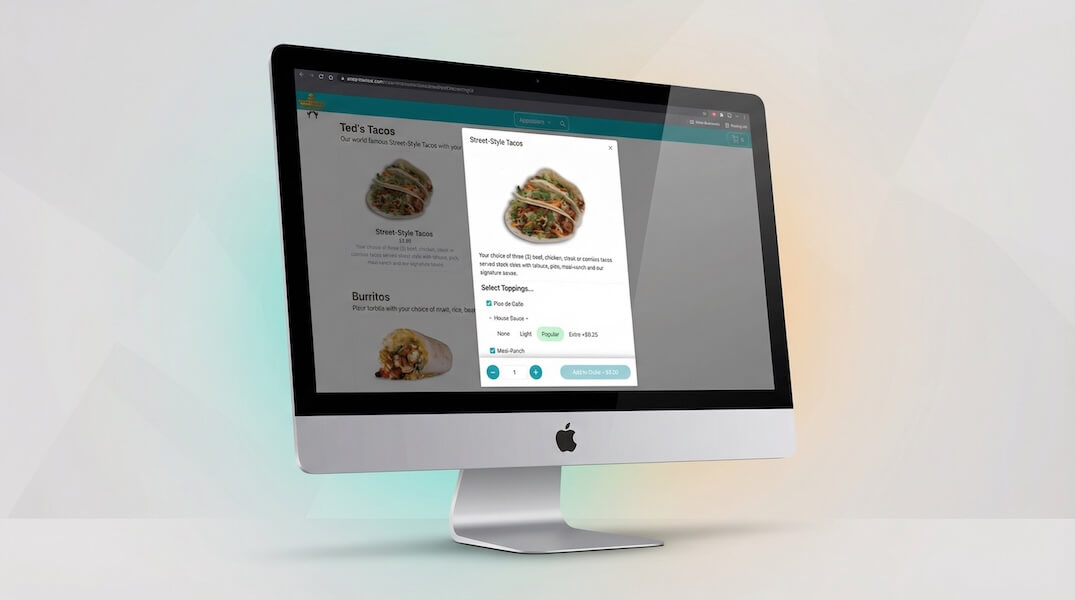
Direct ordering does not automatically fix margin. It works when guests can find the direct channel, the menu is easy to use, and the restaurant follows up with useful loyalty and marketing. The business benefit is control: restaurants can own the guest relationship, reduce dependence on rented audiences, and promote offers that match their actual margin goals.
For example, a win-back message to a lapsed regular may be more valuable than a broad discount to guests who would have ordered anyway. A catering email before office lunch season may create larger tickets than another generic coupon.
Monthly profit-margin checklist
- Review food cost, labor cost, and discount usage against sales.
- Compare direct order volume with third-party and phone orders.
- Look at average ticket size by channel.
- Identify menu items that create high sales but weak contribution margin.
- Check repeat order rate, loyalty activity, email revenue, and SMS revenue.
- Choose one operational improvement for the next month instead of trying to fix every metric at once.
The useful takeaway
Restaurant profitability is not only a finance problem. It is an ordering, staffing, guest retention, and channel-control problem. The more repeat demand a restaurant can bring through direct, measurable channels, the easier it becomes to improve margin without making the guest experience worse.
FAQ
How do you calculate restaurant profit margin?
Divide net profit by total revenue, then multiply by 100. Net profit is revenue after expenses such as food, labor, rent, utilities, marketing, payment fees, and delivery costs.
Can direct online ordering improve restaurant profit margin?
Direct online ordering can help when repeat guests order through restaurant-owned channels, the menu encourages profitable add-ons, and marketing brings known guests back without relying only on third-party marketplaces.
What restaurant metrics should operators review with profit margin?
Review food cost, labor cost, average ticket size, direct order share, repeat order rate, discount usage, refunds, and campaign revenue by channel.